| |
Where are 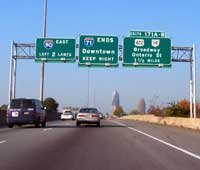
we going?
During the past few decades in Northeast Ohio, our transportation dollars were largely spent to make it easier for people to drive cars farther and faster, as well as to build new roads to open up new land for development.
In the past several years, however, the emphasis has begun to shift in exciting ways. Instead of talking about the growth and expansion of infrastructure, transportation officials are now talking about maintenance of the existing system and greater efficiency. Instead of talking single-mindedly about highways, they are talking about providing greater transportation choicesa diversity of transportation modes (car, train, boat, airplane, bicycle, pedestrian). And they are recognizing that compact land useputting people and places close togetherreduces the need for costly transportation in the first place.
This shift in priorities is happening slowly. After all, old road-building habits are tough to break. But there are a number of motivations, including changing federal priorities, new budget constraints at the federal and state levels, and a growing understanding of how highway expansion promotes destructive urban sprawl. In addition, more citizens are realizing how automobiles have been allowed to dominate the landscape, degrade our quality of life, pollute the air and waste energy.
It will take strong public support to keep our transportation planning moving in a more sustainable direction. Here are some goals and ideas for how you can help.
Transportation goals
Which transportation improvements should get top priority in Northeast Ohio? We should favor transportation projects that will:
- Provide greater transportation choices so people do not have to be totally dependent on the automobile (i.e., maximize use of pedestrian, mass transit and bicycle-friendly options).
- Reduce the need for travel by promoting compact, mixed-use development.
- Minimize duplication of infrastructure.
- Preserve open space.
- Minimize public health threats from air pollution.
- Preserve or enhance a sense of neighborhood and community.
- Do not substantially contribute to further erosion of the tax base of any existing urbanized community in the region.
What citizens can do
- Educate yourself about transportation plans in your community. Although transportation planning is complex, jargon-filled, and time consuming, public participation is invited. Informed citizens can make big difference.
- Promote local zoning and land use plans that won't make people dependent on the automobile.
- Encourage your community to make streets safe and inviting for bicyclists and pedestrians.
- Set a good example by using alternative modes of transportation-take public transit, ride a bike, walk.
What businesses can do
- Locate offices and plants near public transportation routes (even better, within walking and biking distance of employees and customers).
- Work with nearby companies to improve transit opportunities in the vicinity.
- Provide incentives to encourage employees to use transportation alternatives (transit subsidies equal to parking subsidies, bike lockers and shower facilities for bicyclists).
- Help to plan carpools (use a company database to match riders, promote the Rideshare program run by NOACA).
- Allow flextime so employees don't all depart in the middle of rush hour. Spreading the traffic load through the day helps maximize the efficiency of our existing road system.
The key thing to remember is that the need for costly transportation is a sign that places are inconveniently located; the less transportation the better. We should focus on taking care of places, rather than increasing the mobility of cars between places.
This site has not been updated since 2006. EcoCity Cleveland merged with the Cleveland Museum of Natural History to form the GreenCityBlueLake Institute. For up-to-date sustainability news in Northeast Ohio, log on to GreenCityBlueLake's web site gcbl.org
Back to top
EcoCity Cleveland
3500 Lorain Avenue, Suite 301, Cleveland OH 44113
Cuyahoga Bioregion
(216) 961-5020
www.ecocitycleveland.org
Copyright 2002-2003
|
|
Transportation sections
Citizens' Transportation Plan
Transit-oriented development
Traffic calming
Bicycles
Rail
Car-Free in Cleveland
Innerbelt study
Towpath Trail extension
Resources for transportation
Plain Dealer series on Peak Oil
EcoCity's transport blog:
Click here for updates on what's
happening in sustainable transportation
National transportation reform
Federal transportation act (TEA3)
Alliance for a New Transportation Charter
Back to Home
Instead of thinking of going places, think in terms of being places. That is, think in terms of establishing desirable places close to one another. Transportation is what you have to do to get to places inconveniently located: the less the better. For an occasional adventure, transportation is great and the world needs people not only going to foreign places but learning about them in depth and with sympathy. However, when it comes to travel to keep a vital urban lifestyle together, the less that is necessary the healthier your life and your environment.
Richard Register
EcoCity Berkeley
|
|